Australia is experiencing a digital asset revolution. From seasoned high-net-worth investors to
SMSF trustees exploring portfolio diversification, Australians are increasingly turning to cryptocurrency as a legitimate asset class. But the path to safe, compliant digital asset investing is not simply a matter of downloading an app. It requires a clear understanding of Australia's regulatory landscape, the critical difference between a self-serve exchange and a licensed broker, and the custodial and compliance obligations that protect your wealth.This guide covers everything you need to know about investing in cryptocurrency in Australia — from how
AUSTRAC
regulation works to what sophisticated investors should look for in a professional brokerage partner.
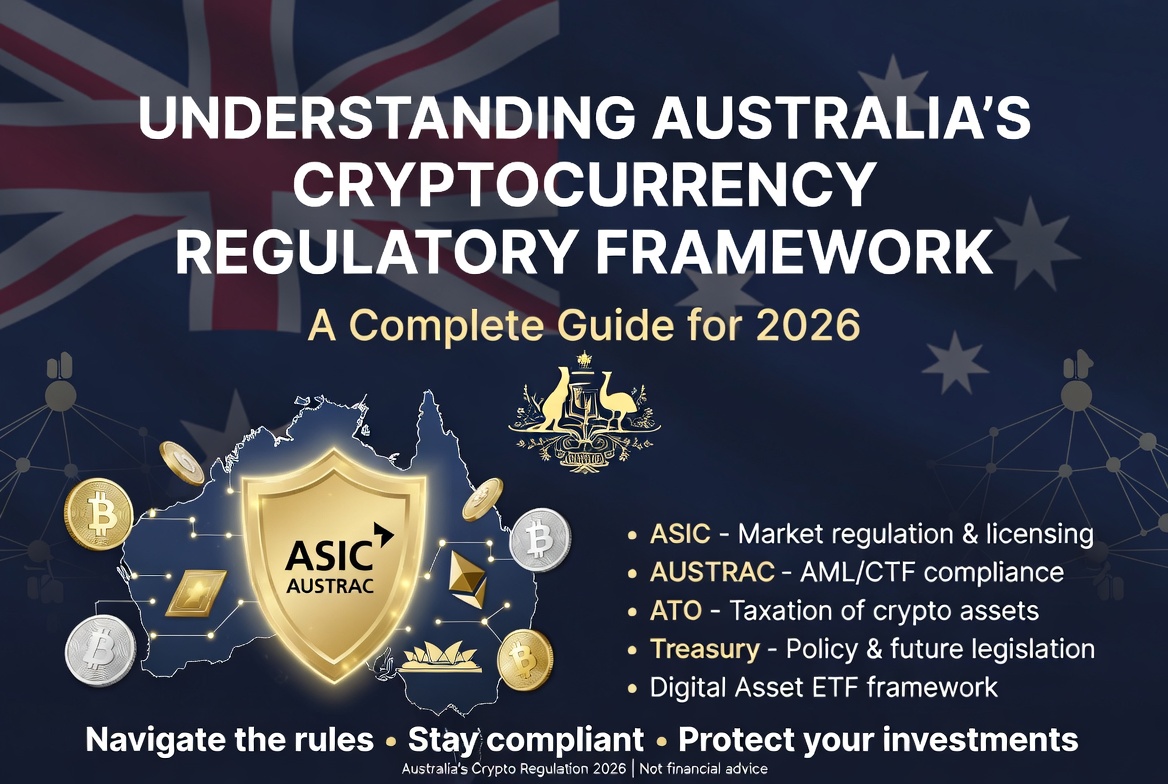
Unlike many jurisdictions where crypto operates in a grey area, Australia has established a defined — if evolving — regulatory structure for digital assets. Two primary bodies oversee the space:
The
Australian Transaction Reports and Analysis Centre (AUSTRAC)
regulates all Digital Currency Exchange (DCE) providers under Australia's Anti-Money Laundering and Counter-Terrorism Financing (AML/CTF) Act 2006. Any platform legally operating as a cryptocurrency exchange in Australia must be registered with AUSTRAC, hold a DCE Provider Number, and maintain rigorous
Know Your Customer (KYC)
, transaction monitoring, and suspicious matter reporting obligations.
This is not merely a bureaucratic checkbox. AUSTRAC registration means an investor can be confident that the platform has undergone compliance scrutiny — that it maintains proper customer verification, safeguards funds, and reports suspicious activity to regulators. Operating with an unregistered platform exposes investors to fraud risk, compromised fund security, and potential tax reporting failures. NAX Capital holds
AUSTRAC DCE Provider No. DCE 100758840-001
— you can verify any provider's status directly on the
AUSTRAC public register.
The
Australian Securities and Investments Commission (ASIC)
governs financial services more broadly. Where digital assets exhibit characteristics of financial products — for example, where custody, investment scheme structures, or derivatives are involved — platforms may also require an
Australian Financial Services Licence (AFSL)
. Investors working with a firm that holds both AUSTRAC registration and appropriate AFSL authorisations receive an additional layer of regulatory protection that purely self-serve exchanges cannot offer.
Capital Gains Tax (CGT)
applies when you sell, exchange, or dispose of a digital asset
A one-third CGT discount is available for assets held longer than 12 months
Losses are quarantined against capital gains and cannot offset ordinary income
All transactions — including swaps and OTC trades — must be documented and reported
Meticulous record-keeping is not optional. It is a legal requirement for every Australian investor in digital assets, regardless of whether they invest personally or through a structured vehicle like an
SMSF
. For a full breakdown of your crypto tax obligations, read our
complete 2025–26 ATO crypto tax guide.
Key insight:
A licensed broker does not just execute trades. They provide the compliance infrastructure — reporting, record-keeping, and custodial clarity — that keeps your investment on the right side of Australian law.
Many Australians begin their crypto journey on a self-serve exchange. These platforms are accessible, typically low-cost, and suitable for small, straightforward trades. However, for sophisticated investors — particularly those dealing in larger volumes, operating through SMSFs, or seeking institutional-grade custody — the limitations of a retail exchange become significant.
24/7 online trading with immediate execution at market prices
Low or transparent fee structures for standard trades
Wide asset selection across hundreds of cryptocurrencies
Basic compliance with AUSTRAC KYC requirements
Personalised execution
— a dedicated professional manages your trades, minimising
slippage
and market impact
Institutional-grade custody
— assets held under a formal custody arrangement, often including
cold storage
and market impact
OTC desk access
— for high-value or discreet trades where moving capital through a public order book is inappropriate
Audit-ready documentation
— transaction records structured for your accountant and auditor
General financial guidance
— licensed to provide informed market context and education
SMSF-specific support
— structured account and reporting requirements handled professionally
For investors managing six or seven-figure portfolios, family offices, or retirement funds, the choice is not really a choice at all. The compliance, security, and execution quality offered by a
licensed broker like NAX Capital
is not a luxury — it is a fundamental risk management requirement.
One of the most significant developments in Australian crypto investing has been the growing adoption of digital assets within
Self-Managed Super Funds (SMSFs)
. According to the Australian Tax Office, over AU$3 billion in cryptocurrency was held within Australian SMSFs as of June 2025 — a figure that has grown substantially each year.
SMSFs offer unique tax advantages for digital asset investors. Gains on assets held longer than 12 months are taxed at 10% within the fund, compared to up to 23.3% for individuals on a marginal tax rate. In pension phase, the effective CGT rate can fall to zero. These advantages make the SMSF structure compelling for long-term digital asset strategies.
NAX Capital's asset management team
specialises in navigating exactly this structure.
However, investing in cryptocurrency through an SMSF carries specific legal obligations:
Trust deed authorisation:
The SMSF's trust deed must explicitly permit investment in digital assets.
Investment strategy alignment:
The fund's documented investment strategy must reflect the rationale, risk profile, and allocation for cryptocurrency.
Sole purpose test:
All investments must be made solely to provide retirement benefits for members — crypto held for personal enjoyment or use is prohibited.
Strict asset separation:
All crypto wallets and exchange accounts must be registered in the SMSF's name, not the names of individual trustees or members.
No acquisition from related parties:
The fund cannot purchase crypto from members, trustees, or their relatives.
Pensions paid in cash:
SMSF pension payments cannot be made in cryptocurrency.
Given this compliance complexity, SMSF trustees benefit enormously from working with a brokerage that understands
superannuation law
, maintains SMSF-specific account structures, and can provide the audit-ready documentation that auditors require each financial year.
Important:
Several major Australian banks have restricted or capped outbound transfers to crypto exchanges, including BOQ (AU$5,000/month cap from April 2025) and CBA (AU$10,000/month limit). As of early 2026, ANZ's V2 Plus Cash Account remains among the most reliably crypto-compatible options for SMSF trustees. Always verify your bank's current policy before executing large transfers.
For investors executing trades above AU$50,000 — or for those who require discretion and price certainty — the
Over-the-Counter (OTC) desk
is the industry standard. Rather than placing an order on a public exchange order book (which can cause
slippage
and market movement), an OTC desk executes trades directly with counterparties using deep, aggregated liquidity pools.
The advantages of OTC execution are significant:
Price certainty:
You receive a firm quote before committing to a trade, eliminating the risk of adverse price movement during execution.
Minimal market impact:
Large trades on public exchanges can move the market against you; OTC desks operate off-exchange.
Discretion:
OTC transactions are not visible in public order books, protecting your trading strategy and portfolio movements.
Dedicated relationship management:
An OTC relationship means direct access to a professional who understands your portfolio, liquidity needs, and risk tolerance.
Competitive pricing:
OTC desks typically offer tighter spreads for large volumes than retail exchange pricing.
Family offices, institutional allocators, and sophisticated private investors consistently prefer OTC execution for positions above a certain size threshold. It is the difference between retail participation and professional capital management.
Explore NAX Capital's OTC desk
to understand how we execute large trades with discretion and precision.
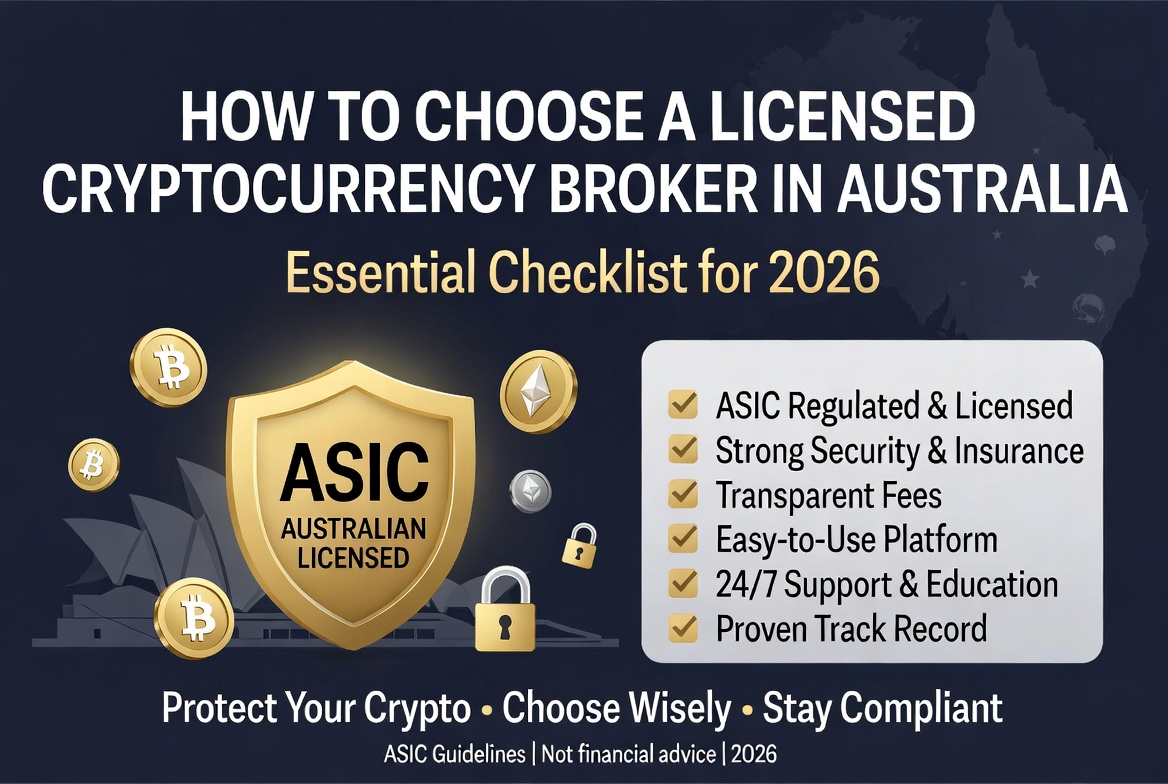
Not all brokerages are created equal. Here are the criteria that distinguish a professional digital asset brokerage from a marketing-led platform:
Confirm the broker holds a current
AUSTRAC Digital Currency Exchange (DCE) Provider registration
. You can verify this directly on the AUSTRAC public register. Also check whether the firm holds, or operates under, an
Australian Financial Services Licence (AFSL)
where relevant to the services provided.
Ask specifically how client assets are held. Are they custodied in segregated
cold storage
wallets? Is there a third-party custodian? What cyber security protocols are in place? A credible brokerage will answer these questions transparently and in detail. Review
NAX Capital's security and custody standards
as a benchmark for what to expect.
If you are investing through an SMSF, confirm that the broker offers a dedicated SMSF account structure, provides end-of-financial-year reports compatible with your SMSF accountant and auditor, and has experience navigating superannuation compliance.
NAX Capital's asset management service
is purpose-built for this requirement.
For positions above AU$50,000, confirm whether the broker provides OTC execution. Understand their liquidity sources, typical spreads, and settlement times.
NAX Capital's OTC desk
provides institutional-grade execution for high-value transactions.
Request a clear fee schedule covering brokerage commissions, spread, custody fees, and any administration charges. Reputable brokerages do not obscure their pricing.
Contact NAX Capital
for a transparent breakdown of our fee structure.
The best digital asset brokerages are built on foundations in traditional finance. A team with experience in equities,
fixed income
, or derivatives brings risk management discipline, institutional execution standards, and a client service culture that crypto-native startups often lack.
NAX Capital's team
brings over 10 years of traditional finance experience to digital asset markets.
One of the most important — and often overlooked — aspects of responsible digital asset investing is education. The cryptocurrency market is technically complex, rapidly evolving, and susceptible to misinformation. Investors who understand what they own, why they own it, and how it fits within their broader portfolio are dramatically less likely to make reactive decisions driven by short-term volatility.
Quality brokerage firms offer more than just execution. They provide structured education programs, market insights, and direct access to professionals who can explain the implications of protocol upgrades, regulatory developments, and macro market movements on specific digital assets.
NAX Capital's investor education programs
and
market insights
are designed to build exactly this foundation.
This is particularly important for SMSF trustees, who carry a fiduciary obligation to their fund's members. Trustees who can demonstrate an informed, documented investment rationale are better positioned in the event of an
ATO
audit or compliance review.
Australia's digital asset market is maturing rapidly. Several structural developments are reshaping the investment environment:
Global institutional adoption:
Major asset managers including BlackRock, Fidelity, and VanEck have launched regulated Bitcoin and Ethereum
ETFs
internationally. Australia's fund management industry is watching closely.
Regulatory clarification:
The
Australian Treasury
is progressively developing a clearer framework for digital asset financial services, including proposed licensing reforms that would bring more crypto businesses under
ASIC's
oversight.
Stablecoin development:
The
GENIUS Act
passed in the United States in July 2025 created a defined legal environment for
stablecoins
— a development with implications for Australian financial institutions exploring crypto-backed products.
Industry super fund caution:
As of mid-2025, Australia's major industry funds — AustralianSuper, Aware Super, UniSuper, and others — have made no meaningful move into direct digital asset exposure, citing regulatory ambiguity and valuation challenges. SMSFs and private investors continue to lead adoption.
Banking evolution:
Australian banks are progressively adapting their policies toward crypto, though with significant variation. The relationship between banking infrastructure and digital asset investing will remain an active area through 2026.
For Australian investors, the window of early institutional adoption — before digital assets become a standard allocation in every diversified portfolio — remains open. The question for sophisticated investors is not whether to engage with this asset class, but how to do so with the professional rigour it demands.
Book a discovery call with NAX Capital
to explore how we can support your strategy.
Cryptocurrency in Australia is no longer the frontier territory it was five years ago. It is a regulated, taxed, and increasingly institutionalised asset class — one that demands the same level of professional management as any other component of a sophisticated investor's portfolio.
Self-serve exchanges have their place for retail participation. But for investors who are serious about capital preservation, compliance integrity, and execution quality — whether investing personally, through a family office, or via an SMSF — the right choice is a
licensed broker
with the regulatory standing, custodial infrastructure, and professional depth to manage digital assets at an institutional standard.
The Australian market is increasingly well-served by regulated brokerage options. The key is knowing what to look for, asking the right questions, and choosing a partner whose values and capabilities align with the standards your capital deserves.
Ready to take the next step?
Contact NAX Capital
— Australia's licensed digital asset brokerage built for sophisticated investors.
This article is published for general informational and educational purposes only. It does not constitute financial, tax, or legal advice. Cryptocurrency investments involve significant risk and may not be suitable for all investors. Past performance is not indicative of future results. Always consult a qualified financial adviser, accountant, or legal professional before making investment decisions. NAX Capital is the commercial name of Peer TC Pty Ltd (ACN: 651 368 213),
AUSTRAC
DCE Provider No. DCE 100758840-001.